 Goes Wedding
Fresh vs. Silk vs. Dried Wedding Flowers
 Written by Tessa Broussard
 · Reviewed by Renata Halloran, CWP· Published 2026-08-28· Last checked 2026-08-30
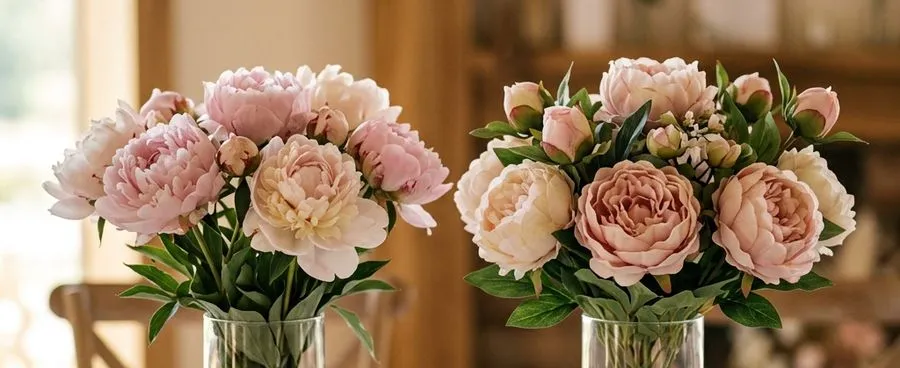
You are staring at three price tags for roughly the same wedding and none of them agree. One vendor says silk saves you thousands.
A blog about dried arrangements says dried is basically free once you own the stems. A friend who did all-fresh flowers three years ago swears fresh was the cheapest option she priced.
They can't all be right, and mostly nobody here is lying to you outright - they're comparing different quality tiers and calling it a material comparison.
That gap is what this article is built to close. Not "which material is cheapest," full stop, because that question doesn't have a single honest answer.
Which material is cheapest at the tier you're actually shopping, and what does each one cost you in something other than dollars - time, allergy risk, how it reads in a photograph taken eight inches from someone's face.
The Myth That Won't Die: "Silk (or Dried) Costs Less"
Search "silk wedding flowers cost" and you'll land on a vendor blog claiming you can save 20 to 80 percent by switching to artificial. That figure is real and it does circulate - and it is also, by definition, a number published by someone who sells silk arrangements. The Knot's own cost reporting pushes back directly: once you match silk to the same quality as the fresh alternative, it is not reliably cheaper.
At least one bride posting in a wedding forum said the same thing after pricing both for her own day.
Both sides are telling a partial truth. Cheap fresh flowers exist. Cheap silk exists.
Expensive versions of both exist too, and the savings claim only survives if you compare a cheap version of one material against an expensive version of the other. That's the entire mechanism behind the myth, worth naming plainly before we go further: quality tier decides the answer, not the material.
You have probably heard that silk is the budget option, most likely from someone selling silk. Sometimes it is. It stops being the budget option at exactly the tier where it stops looking like a discount bin arrangement in your photos, and that tier line is the whole answer to this question.
One more thing worth saying up front, because it gets buried in footnotes elsewhere: a material you buy or rent for a wedding isn't a purchase you walk back easily once it arrives. Order the wrong tier and you're reordering on a shortened timeline, at a worse price, closer to your date - the exact kind of expensive correction the rest of this article is built to help you avoid.
Three claims about material cost, sorted from marketing into fact
- Myth: "Silk is always cheaper than fresh flowers." Fact: only at the budget tier. Premium "real touch" silk can meet or beat comparable fresh once quality is matched, and the 20 to 80 percent vendor savings figure is a vendor claim, disputed by The Knot and consumer reports.
- Myth: "Dried flowers are cheaper because less goes into them." Fact: dried stems still carry the cost of growing the flower fresh in the first place, then drying and storing it on top. That's not automatically cheaper once you match for quality.
- Myth: "Artificial flowers always look fake in photos." Fact: budget-tier material can look cheap at close range. Premium real-touch product is genuinely difficult to tell from fresh at normal viewing distance. It's tier-dependent, not a blanket yes or no.
Fresh vs. Silk vs. Dried, Compared at the Same Quality Tier
Here's what full-wedding material costs look like laid out side by side, pulled from vendor and consumer pricing data rather than one quoted job. Full-wedding fresh flower packages commonly run $1,500 to $7,000 or more, depending on flower choice, arrangement count and season. Silk and other artificial materials for the whole wedding land at $500 to $2,500 in vendor data - lower on paper, no argument there.
Buy your own silk stems and assemble them yourself and the material cost alone drops to roughly $800 to $1,500. Rent premium "real touch" silk bouquets piece by piece instead and you're looking at $65 to $75 per piece, which adds up fast across a wedding party and a dozen centerpieces.
None of those figures are a fixed quote. They're a commercial-source range, disputed in places, and your actual number will move with region, vendor and how much you're ordering. Treat them as a starting point for comparison, not a line you plug directly into a spreadsheet.
What the range does prove: budget-tier fresh and budget-tier silk are both genuinely cheap. Neither is a myth. The trap is comparing them at different tiers - a $500 silk package against a $7,000 fresh package tells you the tier moved, not that silk beat fresh.
Premium real-touch silk, priced per piece through a rental service, can land close to or above what a comparably finished fresh arrangement costs. So here's the one rule that settles the argument: never put a budget silk quote next to a premium fresh quote and call it a fair comparison. Match the tier first, then compare.
If fresh is where you're leaning after all this, the flower-and-price mix really does shift by month - if you are going fresh, check what your month actually has in it.
| Factor | Fresh | Silk/artificial | Dried/preserved |
|---|---|---|---|
| Cost at a matched tier, full wedding | $1,500 to $7,000+ | $500 to $2,500 (DIY purchase $800-$1,500; premium rental $65-$75/piece) | Carries the fresh growing cost plus drying and storage on top - no fixed published range |
| Vase life / durability | About 1 to 3 days before wilting | Multi-year, reusable | Indefinite with dry, shaded storage |
| Advance-assembly lead time | None - built day-of or a day or two ahead | Weeks to months ahead | Weeks to months ahead |
| Allergy & handling | Pollen risk | Hypoallergenic | Hypoallergenic; wash hands after handling dyed or treated stems |
How Long Each Material Actually Lasts
Fresh cut stems last about 1 to 3 days before they start wilting, full stop, no matter how well you condition them. That's the trade you're accepting for the real thing: gorgeous, and gone within the week. Silk stems don't share that clock.
They're a multi-year, reusable material, which is why some couples keep their centerpieces as home decor afterward. Dried and preserved stems sit in between on paper but can outlast silk in practice - stored dry and out of direct light, they hold up indefinitely.
The lifespan gap has a second, more practical consequence than how long the arrangement looks nice on the table: it decides when you can build the thing at all. Fresh flowers get assembled day-of, or maybe a day ahead - biology won't let you get ahead of it.
Silk and dried material can both be fully built weeks or months before the wedding, which matters enormously if you're planning a destination wedding or an elopement and won't have a local florist on hand the week of.
I learned a version of this lesson the expensive way, on my own dress rather than my flowers - I budgeted the money for alterations and completely missed the two-week window to actually book them. Money planned isn't the same as time planned, and a material with a weeks-long lead time punishes that exact mistake the same way a dress alteration slot does.
Self-assembling a full silk order, by the way, is a real time cost of its own, not just a materials line item; we break down what that takes elsewhere on the site.
Does It Actually Look Fake in the Photos?
Will it read as fake? That's the fear underneath this whole comparison, and the honest answer splits by tier rather than by material.
Low-tier artificial flowers, the kind you'll find in a big-box floral aisle, do look cheap at close range in photographs: stiff petals, a plastic sheen, colors that don't quite match anything growing outdoors.
Say that plainly, because pretending otherwise sets couples up for a bad surprise in their own gallery. The same goes for bargain dried stems bought without much attention to grade.
Premium "real touch" silk is a different product.
Good real-touch petals are cast from actual flowers, with the vein texture and matte surface molded in, and they're genuinely hard to pick out from a fresh bloom at the distance a guest or photographer normally stands.
I've handled both side by side at a florist's sample table and had to look twice to sort budget from premium - and I wasn't even the one selling either.
So the photo-realism question collapses back to the same rule as the cost question: tier decides, not material. A couple paying premium prices for real-touch silk is buying realism along with the multi-year lifespan.
A couple buying the cheapest silk available is buying a lower price and accepting that it will read as artificial up close, which may be a fine trade for a reception no one photographs at macro distance, and a bad one for a bouquet held eight inches from a lens all day.
The Hidden Cost Behind "Dried Is Cheaper"
"Dried is cheaper" sounds obvious until you think through what actually goes into a dried stem: someone grew it as a fresh flower first, paid the fresh-flower price for that step, and only then dried and stored it.
The drying and storage is added cost on top of the growing cost, not a shortcut around it. That's the line vendors marketing dried arrangements as the frugal choice tend to leave out of the pitch.
On the plus side, dried material is hypoallergenic and close to maintenance-free once it's prepared - no water changes, nothing wilting the morning of.
The trade-offs are real too: dried stems are brittle and shed easily, the color range runs muted compared to fresh (you won't get a true, saturated red the same way), and the material has to be kept dry and out of direct sunlight or it will mold or bleach out.
A shelf in a closet works better than a sunny windowsill, and that isn't a minor styling note - it's the difference between stems that last for years and stems ruined in a season.
One practical caution worth repeating here: if your stems are brightly dyed or chemically treated to hold their color, wash your hands after handling them. It's a small step, low severity, but worth building into the routine the same way you'd rinse berries before eating them.
Keeping the bouquet after the wedding is a different job with its own timeline and cost, and it deserves its own answer rather than a rushed paragraph here. Keeping the bouquet afterwards is a different job - we cover preservation separately.
Why Some Florists Won't Touch Silk
Here's a wrinkle that surprises a lot of couples: some full-service florists simply won't work with artificial flowers at all. It's not a universal rule, and no one publishes a percentage on how common it is, but it's a documented pattern in the industry, not a rumor.
Ask a florist to build your day around silk and you may get a polite no, which pushes a couple who wants that look toward assembling it themselves instead of hiring it out.
That's not a verdict on silk as a material - it's a consequence of how some florists choose to run their business. (A florist once told me, half-joking, that fake flowers "aren't her medium." Fair enough, it's her studio.) If self-assembly is where you're headed, most silk arrangements end up self-assembled - here is what that weekend really costs.
Mixing Fresh, Silk, and Dried on Purpose
Nobody says you have to pick one material for the whole wedding. Some of the smartest budgets, and the best-looking tables, mix them on purpose, matched to what each part of the day actually needs.
Take a guest list with someone who's sensitive to pollen.
Fresh flowers can trigger a real reaction in guests or in the couple themselves, and dried or artificial alternatives sidestep that risk entirely, not because either material is more virtuous, just because pollen is the trigger and only fresh carries it.
A reader planning around sustainability is a real part of this audience too, though I'll say plainly: the research behind this piece doesn't include comparative environmental data for fresh versus silk versus dried, so I'm not going to hand you a "greener" verdict I can't back up. (If that matters to you, it's worth asking your florist directly rather than assuming any material wins on that count.)
Four ways a deliberate mix can work
- Destination wedding, remote island. Silk centerpieces get assembled and packed weeks ahead of travel, with one small fresh bouquet sourced locally just for day-of photos.
- Allergy-sensitive guest list, indoor reception. Dried arrangements sit on the guest tables, with a single fresh piece kept away from the dining area for the couple's own photos.
- Budget-tight, wants a "real" look up close. Premium silk focal pieces, reusable after the wedding, mixed with a handful of fresh accent stems for scent and macro shots.
- Elopement planned months out, no local florist. A fully dried or preserved palette gets assembled at home well in advance, with no day-of delivery to coordinate.
Match Your Priority to a Material
By now you've got the tier logic, the lifespan trade-off and the photo-realism split, which is a lot to hold in your head while you're also picking a venue.
So here's a shortcut: tell the Material Fit Calculator below your rough guest or table count and the one thing you care about most - lowest cost, longest lead time, or the most realistic look - and it will point you to a material.
One thing it won't do is hand you a dollar figure. The cost question above is still disputed across sources, and a calculator that spat out a number would be dressing up a contested claim as a calculation. What you get instead is a priority-fit answer and the one trade-off that comes with it, which is a more honest thing to build a decision on anyway.
Common Questions
Is silk cheaper than fresh flowers? It depends on quality tier: budget silk and budget fresh are both genuinely cheap, and premium real-touch silk can meet or exceed the cost of comparable fresh. Vendor claims of 20 to 80 percent savings from switching to silk are vendor claims, disputed by The Knot and consumer reports.
Are dried flowers cheaper than fresh flowers? Not automatically. Dried stems carry the fresh growing cost plus drying and storage on top, so the savings only really show up at lower quality or volume tiers.
Do silk or artificial flowers look fake in photos? Budget-tier material can look cheap up close, but premium real-touch product is genuinely hard to distinguish from fresh at normal viewing distance. It comes down to tier, not a blanket yes or no.
How long do silk or dried flowers actually last? Fresh cut stems last roughly 1 to 3 days. Silk stems are reusable for years, and dried or preserved stems can last indefinitely if you keep them dry and out of direct sunlight.
Do dried flowers shed or break easily? Yes - dried material is brittle and prone to shedding. If the stems are brightly dyed or chemically treated, wash your hands after handling them.
Can I mix fresh, silk, and dried flowers in the same design? Yes. A deliberate mix is a real option for destination logistics, allergy sensitivity, or a tight budget - see the scenario list above for how that actually plays out.
Ready to stop guessing? Run the calculator above with your own guest count and priority before you order samples of anything - it names a material, not a price, since that number is still disputed. Browse the flowers and decor category for the rest of what this site covers on wedding flowers.