 Goes Wedding
What Does Black Tie Optional Mean? Codes Decoded
 Written by Tessa Broussard
 · Reviewed by Renata Halloran, CWP· Published 2026-08-28
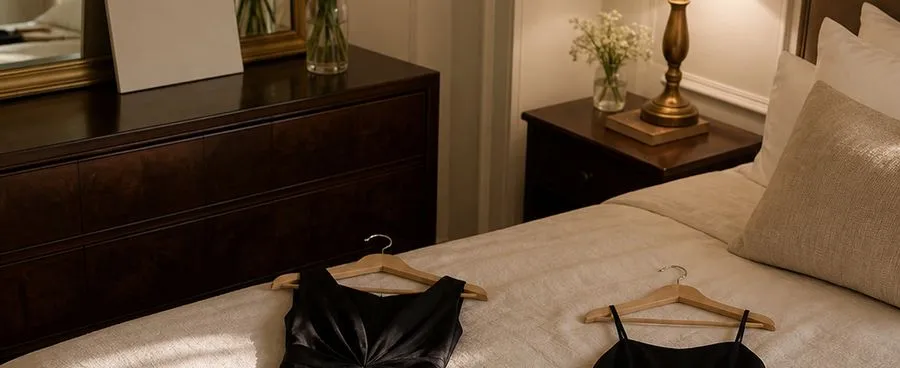
You Got the Invitation. Now What Is It Actually Asking You To Wear?
You have got an invitation, a stiff card with two words printed near the bottom, black tie optional, and no real sense of what that means for your closet. There is no host you can text without it feeling strange, and the date on the card is not moving. Here is the part nobody tells you up front: no government office and no single etiquette authority owns these terms.
Retailers and wedding-etiquette writers do not fully agree with each other on what black tie optional or garden party actually requires. This article says exactly where they disagree, then hands you a fallback you can use with confidence instead of guessing.
The Wedding Dress Code Hierarchy, Decoded
Wedding dress codes run on a rough ladder, from the strictest formality down to whatever a beach ceremony asks for. In order, roughly: white tie, black tie, black tie optional (sometimes printed as invited or preferred), cocktail or formal, semi-formal, festive, garden party, and casual or beach. I say roughly on purpose.
The middle of that ladder is exactly where sources start disagreeing with each other, and two respectable etiquette guides can rank the middle tiers in a different order and each defend the placement.
The table below gives the working definition for every rung, plus a flag wherever a phrase has more than one accepted reading. Black tie optional and garden party attire both carry one, and each gets its own section further down.
| Phrase (as printed on the invitation) | Typical men's attire | Typical women's attire | Disagreement flag |
|---|---|---|---|
| White tie | Black tailcoat, white bow tie, formal trousers | Full-length formal gown | - |
| Black tie | Tuxedo | Floor-length gown or a formal cocktail dress | - |
| Black tie optional / invited / preferred | Tuxedo welcome, dark formal suit acceptable | Sources disagree on required length - see "Black Tie Optional" below | Sources disagree on length - see below |
| Cocktail / formal | Suit with a tie | Knee-length or midi cocktail dress | - |
| Semi-formal | Suit, tie optional | Dressy separates or a cocktail dress | - |
| Festive | Suit or sport coat in a seasonal color | Festive-colored dress or dressy separates | Loosest, least consistent definition - see "Cocktail, Semi-Formal, and Festive" below |
| Garden party | Lightweight suit or sport coat, tie optional | Midi or tea-length dress, flat or block-heel shoes | Sources disagree on ranking - see "Garden Party" below |
| Casual / beach | Linen shirt, chinos, no tie | Sundress or lightweight separates | - |
"Black Tie Optional": The Phrase Everyone Gets Wrong
Ask ten guests what black tie optional means and their answers split into two camps, not one. Start with the part that is not in dispute: for men, a tuxedo is welcome but not required. A dark, well-cut formal suit, black or midnight navy, with a conservative tie, satisfies the code.
Nobody is checking for a bow tie at the door.
For women, the sources genuinely split. One major wedding-planning site holds that black tie optional calls for a floor-length or ankle-length gown, treating it as close to identical to black tie for anyone who is not wearing a tuxedo. A bridal-retail blog, Adrianna Papell's, allows a tea-length dress or a dressy jumpsuit under the same label.
Both are live readings of the same two words, and I am not going to pretend one of them is simply correct. If you want the safe version, take the longer, more formal reading, floor or ankle length. Dressing slightly too formal at black tie optional draws far less attention than the reverse.
One more honesty note. (I spent three years reconciling vendor copy against etiquette guides for a living, and black tie optional was the one phrase that never resolved cleanly, no matter which sources I stacked against each other.) The clearest attribution I could trace back to an etiquette authority, Emily Post's institute, runs through a magazine piece quoting Emily Post, not a direct, dated publication from the institute itself.
Treat that attribution as secondhand until someone locates the original.
Cocktail, Semi-Formal, and Festive Attire: Where the Middle Gets Blurry
Guests confuse cocktail attire with semi-formal constantly, and festive attire muddies things further. Honestly, the confusion is reasonable: the differences are real but narrow. In the sources that define both terms, cocktail attire ranks above semi-formal.
Cocktail typically means a knee-length or midi dress and heels for women, a suit with a tie for men. Semi-formal allows a touch more give, dressy separates in place of a full dress, a suit worn without the tie. If your outfit would work at either level, you are fine.
Festive attire is newer, and it shows. It gets attached mostly to holiday-season weddings or receptions built around an explicit celebratory theme, a New Year's Eve wedding, say, or a reception during Christmas week. What it asks for is less a formality level than a mood: richer color, maybe a fabric with more shine or weight than you would wear to a plain cocktail event.
I will not hand you a precise formality ranking for festive attire the way I can for cocktail versus semi-formal, because the sources do not agree closely enough for that kind of precision to be honest.
Read it as cocktail-adjacent with more room for color, and if the invitation gives any other clue, a stated dress code, the venue, the season, weight that clue more heavily than the word festive on its own.
Garden Party Attire and the Contested Middle Tier
Sources cannot agree on where garden party attire ranks, and this argument is about placement, not about what to wear. Some guides put it level with cocktail attire. Others rank it below cocktail, closer to semi-formal or dressy-casual.
I cannot resolve that argument here, but I can give you what actually matters for the outfit: garden party weddings are, by definition, outdoors, often on grass or gravel.
That means lighter fabrics and colors, plus shoes that will not sink into the grass, flats or a block heel, never a stiletto. (In eight years of editing this stuff, the shoe question is the one detail vendors and etiquette sites agree on without exception: heels sink into grass, every time.)
One pattern is worth knowing beyond the label itself: destination and outdoor weddings in general tend to run more casual than their stated dress code suggests on paper, regardless of which tier the invitation named.
Guest Color Etiquette: What's Actually Off-Limits
White and ivory are off the table for guests, full stop, at any formality level. That is the one hard rule in this whole article, and the reason is not modesty, it is that the color competes with the bride. The older ban on wearing black, by contrast, is widely described in current wedding-etiquette writing as relaxed.
Neither is enforced by anyone at the door, but both still get noticed.
| Myth | Fact |
|---|---|
| You can never wear black to a wedding. | That taboo is widely described as relaxed today. It is not entirely risk-free at an ultra-formal event, so checking with the couple never hurts. |
| Any dark, non-white dress is automatically fine. | White and ivory specifically stay off-limits at any formality level. The concern is competing with the bride, not formality. |
No Dress Code Listed? Here's How to Decide
Plenty of invitations skip the dress-code line entirely, which is its own kind of unhelpful. When that happens, work from what you do know: the venue, and the time of day. Season matters too, and the tree below walks through where it tips the decision.
The three-question decision tree.
- Is the venue indoor and formal (ballroom, hotel, historic building), outdoor and garden-style (backyard, vineyard, lawn), or casual-destination (beach, ranch, brewery)?
- Is the ceremony or reception during the day or in the evening? Daytime softens the read one notch; evening keeps the more formal reading.
- What does the season and climate ask for? Hot and outdoor wants breathable fabric and flat or block-heel shoes; cold or indoor-evening wants heavier fabric and closed shoes.
Where you land: signals pointing indoor or evening, or giving you nothing clear at all, mean dressy cocktail-adjacent is the safe default. Signals pointing outdoor, garden, or daytime mean lighter and garden-appropriate is the safe answer. If the signals actively conflict, an indoor ballroom booked for early afternoon with no other clue, for instance, ask the host directly.
That is the correct move, not a failure.
Before you commit, run the self-check: if you turn out to be wrong about the formality, does your outfit read as slightly overdressed or slightly underdressed? Aim for overdressed. A suit at a casual backyard barbecue reads as respect.
Shorts at a black-tie-adjacent hotel ballroom reads as a mistake nobody will mention to your face.
Frequently Asked Questions
What does "black tie optional" mean? For men, a tuxedo is welcome but a dark, formal suit is fully acceptable. For women, sources genuinely disagree: one major guide requires a floor- or ankle-length dress, another allows tea-length or a jumpsuit. If you want the safe read, take the longer, more formal option.
Is cocktail attire more or less formal than semi-formal? Cocktail attire ranks above semi-formal in the sources that define both terms. Cocktail typically means a knee-length or midi dress with a suit and tie for men; semi-formal allows a slightly more relaxed suit, often without the tie. If your outfit would work at either level, you are covered.
Does wedding dress code formality vary by region? Yes, in practice, though the printed label still comes first. Destination weddings and outdoor or garden ceremonies tend to run more casual than their stated dress code suggests on paper. Treat the invitation's wording as the primary signal and the venue type as a secondary adjustment.
I can't figure out what "festive attire" means for a wedding, what should I wear? Festive attire is the newest and loosest of the mid-tier phrases, so there is no single strict formality level attached to it. It usually signals a celebratory or seasonal mood, often for a holiday-season wedding, more than a specific dress code. When in doubt, read it as cocktail-adjacent with more freedom on color.
Is there a citable etiquette-authority definition of "black tie optional"? Not one I could verify directly. The clearest attribution traces back to Emily Post only secondhand, through a magazine article quoting her institute, with no dated original publication located. Treat that version as secondhand rather than as a confirmed, authoritative source.
If you are renting rather than buying: Renting a tuxedo for this one? Read the return deadline before you book. And if you are standing up in the wedding, not just attending: Standing up in the wedding, not just attending? Here is who pays for what.
For outfit ideas organized by dress code, browse the full attire hub for what to buy, rent or borrow.