 Goes Wedding
Tiffany Engagement Rings: Price & Certificate
 Written by Tessa Broussard
 · Reviewed by Renata Halloran, CWP· Published 2026-08-28· Last checked 2026-09-01
Some links on this page are affiliate links; if you buy through one, we may earn a commission. That relationship never decides which companies we cover or what we conclude about them - see our review methodology.
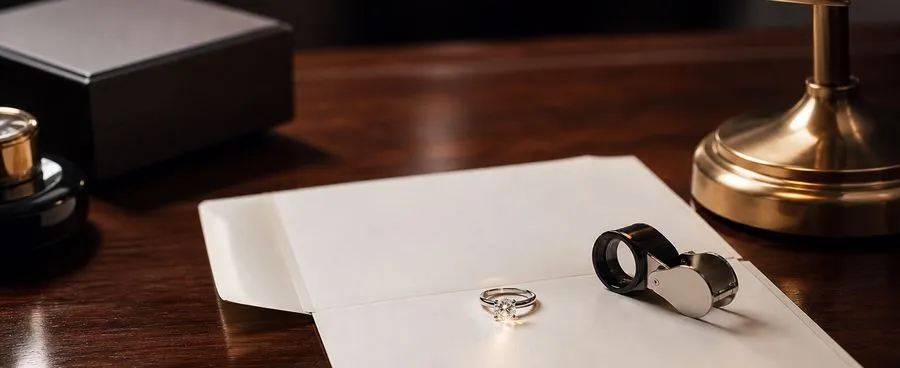
Tiffany & Co. is a heritage luxury house, not an online discounter, and it sold rings out of physical stores for more than a century before any other name on this hub existed.
That is why people put Tiffany on a mental shortlist without comparing specs first.
This page keeps the honest verdict every heritage story implies: Tiffany is a legitimate, considered pick for a reader who wants brand and craftsmanship enough to pay for them, not the pick for price transparency or lab-grown access.
Before that verdict, though, two things no competitor page in this space discloses up front: who actually owns Tiffany today, and what its diamond certificate is and is not.
At a Glance: Tiffany & Co.
| Field | Tiffany & Co. |
|---|---|
| Business model | Heritage luxury house, physical-retail-first, an LVMH subsidiary since January 2021 |
| Product type | Natural diamonds only; no lab-grown diamonds as of this check |
| Certification | Proprietary in-house certificate - not an independent lab report |
| Return, resize, warranty | Not documented in the research behind this page; confirm directly with Tiffany before relying on any figure |
| In-person access | Extensive flagship and boutique network across the US |
This page may earn a commission if you buy through a link here; that never changes what we tell you about a seller's certificate, ownership, or price.
The Four Kinds of Engagement-Ring Seller
Every retailer in our engagement-ring hub falls into one of four models: online-first direct sellers, mall and chain jewelers, heritage luxury houses, and lab-grown or simulant specialists.
Tiffany is the only heritage-luxury entry among the ten sellers we cover, with no direct twin here - nothing else in the hub combines a century-plus retail history with LVMH ownership. If you want the 4Cs explained or certification basics walked through, that lives on the hub and its guide pages, not here.
Who Tiffany & Co. Is, and How It Sells Rings
Tiffany opened in New York in 1837 and has operated as a physical-retail-first jeweler for essentially its whole existence, from flagship stores to boutiques inside upscale malls, with a level of walk-in name recognition most sellers in this hub simply don't have.
That long presence is a real legitimacy signal - nothing in the research behind this page flags Tiffany as a channel-risk retailer the way a newer online-only name sometimes gets flagged.
The business model follows from the history.
Rings sell in person as often as online, with staff trained to walk a customer through stone and setting choices face to face (a level of hand-holding I never got shopping for my own dress, for what it's worth).
Tiffany describes its diamonds as natural, ethically sourced stones - the company's own claim about its supply chain, not something independently verified in this research, so treat it as a seller statement rather than an audited guarantee.
One plain fact worth stating once, since it comes up throughout this page: every diamond Tiffany sells is a natural stone. There's no lab-grown option in the current lineup.
The LVMH Deal: What the Tiffany Name Actually Buys
Here's the fact almost no competitor page mentions: Tiffany & Co. is not an independent company anymore. LVMH, the French luxury conglomerate that also owns Louis Vuitton and Dior, announced its acquisition of Tiffany on November 25, 2019, at $135 a share, a deal worth roughly $16.2 billion.
The two sides fought over the price through 2020 - LVMH tried to walk away, Tiffany sued, and they settled on $131.5 a share, about $15.8 billion final. The deal closed on January 7, 2021. Tiffany was delisted from the New York Stock Exchange that day and now operates as an LVMH subsidiary run out of New York City.
That timeline is documented in LVMH's own SEC filing, not a rumor.
What that means in plain terms: buying a Tiffany ring means buying from a division of the largest luxury-goods company in the world, not from an old-world family jeweler still run by descendants of the founder.
I don't read that as a reason to avoid Tiffany - LVMH runs plenty of houses that keep their craftsmanship standards intact under corporate ownership. But the "heritage house" story sells better when the reader doesn't know the ownership changed in 2021, and every other page covering Tiffany in this space leaves that detail out.
What Actually Sets Tiffany Apart
Take Tiffany out of its hub and it's still the only heritage-luxury seller most engaged buyers have already heard of before they start shopping - recognition that rests on brand, craftsmanship claims and natural-only sourcing rather than on price transparency or breadth of stone options.
Tiffany calls its top diamond grade the "triple excellent cut" and markets a named "True" cut for stones over 0.18 carats, describing both as an industry exclusive.
Those are Tiffany's own claims about its own cutting standards, and nothing in the research behind this page independently corroborates the superiority claim beyond what Tiffany states on its own site.
Read "industry exclusive" as marketing language, not settled fact - the FTC's jewelry guides exist specifically because a superlative claim like this one needs attribution to the source making it, not repetition as if a third party confirmed it.
Now the lab-grown question, since readers ask it constantly. As of this check, Tiffany does not sell lab-grown diamonds. Multiple sources agree, though none is a single citable Tiffany policy page, so treat it as well-supported rather than officially documented.
This is a snapshot, not a promise: lab-grown policy across this industry has moved fast over the past few years, and a "does not sell" answer today doesn't guarantee anything about next year. If lab-grown access matters more to you than the Tiffany name, see how lab-grown and mined stones actually differ before you shop further.
What a Tiffany Engagement Ring Actually Costs
I'll be straight about this section's biggest limitation: Tiffany does not publish a transparent starting price for engagement rings anywhere in the research behind this page.
The only figure available comes from a lab-grown-diamond competitor's blog - a company with an obvious interest in making mined-diamond retailers look expensive, writing without a confirmed publication date.
That source puts a one-carat Tiffany ring somewhere in the range of $9,500-$35,000. Treat that as one outside estimate, not as "Tiffany's price," because it isn't Tiffany's own number and nobody has verified it against an actual transaction.
This is exactly the kind of number I used to chase without checking what it represented.
Early in planning my own wedding, I built a budget around a single headline figure I'd seen quoted somewhere, the same way I later counted guests instead of the households actually receiving invitations - off by forty because I counted the wrong unit under deadline pressure.
There isn't even a confirmed number to chase here. For general framing on what an engagement ring costs, our guide to what the salary rule is really based on covers that without pretending any one retailer's figure is gospel. For an actual number on a Tiffany ring, request a quote in person or through tiffany.com - that's the only price that will reflect the stone you're actually considering.
The In-House Certificate, and What We Could Not Confirm About Returns
Here's the disclosure this page leads with, because it matters more than the price question: Tiffany diamonds come with a proprietary, in-house certificate.
That certificate is not the same thing as an independent third-party grading report from GIA, AGS or IGI, and the two should never be treated as equivalent when you're judging what you're actually buying.
An independent lab has no financial stake in how a stone grades. A seller's own certificate, however well produced, is written by the party selling you the stone.
I spent years reading vendor contracts before I ever wrote about weddings for a living, and I read a certificate the same way I used to read a stationer's proof: not for what it implies, but for exactly what it promises on the page.
A GIA report promises an independent grade. Tiffany's certificate promises that Tiffany examined the stone and stands behind its own description of it - a real thing, just not the same thing.
The second gap is more basic, and I'd rather state it plainly than soften it: this research found no documented return window, resizing policy or warranty terms for Tiffany at all. Not an unconfirmed figure, not a range - nothing. That's a deeper hole than what turned up for some other sellers in this hub, where at least a third-party source had something to cite.
I'm not inventing a number or borrowing a policy from another retailer's page to fill it. If you're this far into deciding, read Tiffany's own current return and resizing policy directly on tiffany.com before you commit.
Before you buy anywhere in this hub, not just at Tiffany, run through this:
- Certification - is the stone certified by an independent lab, not just the seller?
- Return window - is it stated in writing, with an actual number of days?
- Resize and warranty terms - have you read the exclusions, not just the headline promise?
- Seller contact information - can you find a real phone number or address, not just a contact form?
- Independent reviews - checked on a review platform separately from the seller's own testimonials?
For Tiffany specifically, items one and two carry extra weight: its certificate isn't independent, and this research turned up no return-window figure at all.
Reviews, Reputation and the Questions Buyers Actually Ask
I'll be honest about a second gap here too: the research behind this page did not turn up an independent review-aggregator score, no Trustpilot rating, no BBB grade, specifically for Tiffany. That's different from Brilliant Earth, where a documented rating distribution exists and gets cited on that seller's own page.
Rather than invent a number or borrow one from a different retailer, I'm saying plainly that no verified score is available as of this writing. If you check Tiffany's live BBB or Trustpilot listing yourself and find a current score with a date attached, weigh it - just don't take my word for a figure I can't cite.
What is well documented, at least in shape, is what buyers actually worry about.
Three concerns come up again and again: whether the premium buys anything beyond the brand name itself, whether an in-house certificate is as trustworthy as an independent one, and whether Tiffany will ever offer lab-grown stones.
Those aren't hypothetical worries invented to fill a section - they're the real, recurring shape of skepticism this brand attracts, and each one gets a direct answer somewhere else on this page.
Honest Verdict: Who Tiffany & Co. Suits
Tiffany suits a buyer for whom the brand and the craftsmanship story, backed by an in-store experience most sellers on this hub can't match, are worth paying a real premium over a comparably specced stone elsewhere.
A sales associate walking you through settings in person and a blue box to leave with is a genuine experience some buyers value on its own terms, separate from the stone inside it. If that's what you want, this page isn't talking you out of it.
It's not the pick if you're optimizing purely for price transparency or lab-grown access.
Say it one more time, because it's the whole point of this page: the in-house certificate is not an independent grading report, and the only price figure here is a competitor's undated estimate, not a number Tiffany itself publishes.
If price transparency matters more to you than the name, see how an online-first seller prices the same specs - a different model entirely, built around showing the math up front.
If sourcing and supply-chain narrative matter more than heritage, the seller that leads with sourcing instead of heritage is worth a look before you decide.
Related Engagement-Ring Retailers
Before you settle on a seller anywhere in this hub, spend ten minutes with the tool built for exactly this decision: work out which spec choices you will actually see in the finished ring, not on a spec sheet.
It never names Tiffany, or any other seller, as the right answer, whatever numbers you enter.
Tiffany & Co. FAQ
Who owns Tiffany & Co. now? LVMH, the French luxury conglomerate, has owned Tiffany since a deal completed on January 7, 2021, announced in 2019 and renegotiated after a 2020 dispute over price. This is a documented fact from LVMH's own SEC filing, not a rumor - and it's worth knowing because no competitor page covering Tiffany in this space discloses it.
Does Tiffany sell lab-grown diamonds? Not as of this writing, per multiple sources. Lab-grown policy is moving fast across this entire industry, though, so treat this as a snapshot rather than a permanent rule. Check current availability before you assume it hasn't changed.
Is Tiffany's diamond certificate the same as a GIA report? No. It's Tiffany's own proprietary in-house document, produced by the company selling you the stone, not an independent third-party grading report. Don't treat the two as equivalent when judging a stone's quality or comparing prices against a competitor's GIA-graded stone.
Is a Tiffany engagement ring worth the price? For a buyer who values the name and the craftsmanship story enough to pay for them, yes, on the evidence available here. For a buyer optimizing for price transparency or lab-grown access, look elsewhere in this hub - there's no universal yes that applies to every kind of buyer.
What is Tiffany's "triple excellent cut"? It's a Tiffany-branded proprietary cut grade, including a named "True" cut for stones over 0.18 carats, that the company markets as an industry exclusive.
This research found no independent corroboration of that superiority claim beyond what Tiffany states on its own site, so read it as marketing language backed by Tiffany's own standards, not a verified third-party grade.
Before you decide, verify the two facts this page leans on hardest: the LVMH ownership history, checkable against LVMH's own filing, and Tiffany's current certificate and pricing language, best confirmed directly on tiffany.com or in a boutique rather than taken secondhand.
If you're spending this much on a stone, get an independent appraisal from someone with no stake in the sale before you commit.