 Goes Wedding
How Much Does Each Wedding Guest Actually Cost?
 Written by Tessa Broussard
 · Reviewed by Renata Halloran, CWP· Published 2026-08-28· Last checked 2026-08-30
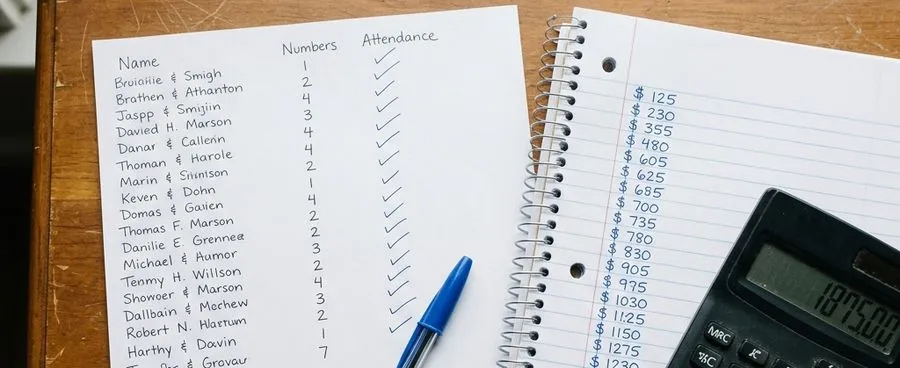
Every name on that list is a per-person charge on somebody's invoice, and the venue is not counting households.
I did, on my own wedding, and I ordered forty invitations I did not need - I counted "the Smiths" as one line instead of four, then spent a week wondering why the print run looked wrong.
Before the etiquette question, do the multiplication: this is what one more guest costs you, and it is the fastest lever you have in the entire budget.
I'm not the only planner who's made that exact mistake.
Vogue has quoted wedding planner Jeannette Tavares naming the same failure mode as one of the most common she sees: couples think in families, vendors bill in people.
That's the frame for everything below - this is a multiplication problem first, an etiquette problem second, and the honest finding, after working through every decline-rate figure I could find, is that none of them is consistent enough to plan an over-invite strategy around.
What One More Guest Actually Adds to Your Total
Start with two different numbers, because they answer two different questions, and the industry mixes them up constantly.
The Knot's 2026 Real Weddings Study reports a blended average of about $292 per guest for 2025 weddings, a figure that spreads fixed costs, photography, music, the venue rental itself, across every single head at the reception.
That's useful for a sanity check: divide a vendor's total quote by your headcount and you should land somewhere near it, give or take.
It's the wrong number for a different question: what does cutting five guests actually save you? For that, use the guest-scaling-only estimate instead, reported at roughly $200 to $450 per additional guest, with a narrower estimate citing $150 to $300. This range isolates what genuinely grows with headcount, catering, rentals, favors, escort cards, and excludes costs you're paying whether 80 people show up or 180.
One more caution, because I spent eight years on a personal-finance desk asking "compared to what, and as of when" before trusting any published average (old habits die hard): a $284 figure circulates alongside the $292 one, and CNBC Select has flagged that $284 as likely The Knot's own 2024 number, mislabeled as 2025's.
The Knot Worldwide's own press language, "up $8 per guest from 2024," backs that reading up. One digit off, one year off, and you're comparing your quote to the wrong year's market.
| Estimate | Amount | What it includes | Source + year | Status |
|---|---|---|---|---|
| Blended per-guest average | ~$292 | Fixed costs (venue, photography, music) spread across every guest | The Knot, 2026 Real Weddings Study (2025 data) | Commercial survey figure, not independently confirmed |
| Guest-scaling-only estimate | $200-450 per added guest | Costs that scale directly with headcount: catering, rentals, favors, escort cards | Aggregate industry estimate, no single platform named | Reported industry range |
| Narrower scaling estimate | $150-300 per added guest | Same scaling categories, narrower band | Aggregate industry estimate, no single platform named | Reported industry range |
| Circulating $284 figure | ~$284 | Same blended categories as the $292 figure | Cited alongside The Knot's data; flagged by CNBC Select | Likely a mislabeled prior-year figure |
No row above is averaged with another to produce a single "true" per-guest number. Use whichever one answers the question you're actually asking.
Put your guest number back into the full category split once you have your own per-guest figure, and size the total against your headcount in the budget calculator before you go further.
The Decline-Rate Rule of Thumb Is Too Wide to Bet On
Ask five wedding sites what percentage of guests decline and you get five different answers, and the honest problem is that they don't agree with each other by enough to matter. The most-cited version is the "20% rule of thumb": invite assuming one in five will say no, expect 80% acceptance. The Knot's own editorial content uses that figure.
But The Knot's own internal data, pulled from RSVPs on weddings booked through the platform, reports 17% decline, not 20%. That's the same company producing two different numbers for the same question.
It gets wider from there. A segmented estimate breaks acceptance down by guest type: roughly 85% for local guests, 55% for out-of-town guests, and 35% for destination guests. A separate estimate puts local-only decline at about 15%, climbing to 25% to 40% once travel is required.
Line all four up and the spread runs from about 15% at the tight end to over 40% at the wide end, depending entirely on who's on your list and how far they have to travel.
Here's the position this article takes, and it isn't a hedge: that spread is too wide to plan an over-invite strategy around, full stop. None of the rates above should be treated as predictive of your own wedding, because none of them is confirmed against an independent or official source. They're reported industry figures, not measured outcomes for a guest list that looks like yours.
The practical consequence matters more than the disagreement itself. "Invite 20% more than I can afford, expect them to decline" is a plan built on a guess, and a guess can miss in either direction. Miss low and you've paid for chairs nobody sits in. Miss high and you're negotiating a headcount overage with a caterer nine days before the wedding, which is worse than the conversation you were trying to avoid.
The four estimates below are shown side by side, never averaged into one number, because the spread itself is the finding this section is making.
| Estimate | Guest segment it applies to | Reported rate | Source (where named) | Status |
|---|---|---|---|---|
| "Rule of thumb" | All guests | 20% decline (80% acceptance) | The Knot editorial | Widely cited, not independently confirmed |
| Platform's own RSVP data | All guests, one platform | 17% decline | The Knot (same parent company as above) | Internal figure, not an independent check on the rule of thumb |
| Segmented estimate | Local / out-of-town / destination | 85% / 55% / 35% acceptance (15% / 45% / 65% decline) | No single source named | Reported industry estimate |
| Travel-required estimate | Local-only vs. travel-required | ~15% decline local-only, rising to 25-40% when travel is required | No single source named | Reported industry estimate |
| Destination-wedding trend | Destination weddings | "Yes" rate rose from ~69% (2019) to 75% (2022), plus a separate 5-10% drop-off between RSVP-yes and actual attendance | One destination-wedding platform, not individually named | Reported by one platform, not independently confirmed |
| General destination statistic | Destination weddings | 30-50% decline | Separate, unnamed source | Does not reconcile with the row above |
Destination and Travel Guests Skew the Math Further
If your list leans heavily toward guests who need a flight or a multi-hour drive, the numbers above shift again, and the two figures don't agree with each other either.
One destination-wedding platform reports its own "yes" rate climbing from about 69% in 2019 to 75% in 2022, plus a separate 5% to 10% drop-off between an RSVP marked yes and the guest actually showing up on the day.
That's one framing: rising acceptance, with some erosion at the finish line.
A separate, more general statistic cites 30% to 50% decline for destination weddings overall, which sits nowhere near the first figure and doesn't reconcile with it. Both numbers describe the same broad category of wedding. Neither is necessarily wrong; they're measuring different populations, different years, or different definitions of "destination," and the research behind this article can't tell you which.
The practical instruction is simpler than the numbers themselves. If your list is heavy on travel or destination guests, build your ceiling on a more conservative figure than you'd use for a local-only crowd. Don't apply the local acceptance rate to a list that isn't local.
Setting a Guest Ceiling You Can Actually Defend
At some point the abstract multiplication has to turn into one number: the most people you can invite. Here's how I'd build that number, and it starts with what's actually left in your budget, not with who you wish could come.
Take your total wedding budget and subtract everything that doesn't change with headcount, venue rental, photography and videography packages, music, your dress and his suit. What's left is the pool that scales with every additional name.
Divide that pool by a per-guest figure you choose on purpose: the blended average from the table above for a conservative ceiling, or the guest-scaling-only estimate for a narrower question like "what does cutting five guests actually save me."
Don't mix the two figures in the same calculation, or you'll double-count some costs and miss others entirely.
That quotient is your ceiling on invited guests, not RSVP'd guests. Resist the urge to inflate it because you expect some people to decline; the section above is exactly why that bet doesn't hold up. If the ceiling comes in under your actual must-invite list, you have two honest options: cut the list, or raise the budget.
People take a third option anyway, inviting past the ceiling and hoping enough decline, and I'd argue against it every time, because it turns your budget into a bet you don't control. (I wish someone had handed me this math before I ordered those forty invitations.)
Setting your guest-count ceiling
- Total what's left of your budget after fixed, headcount-independent costs, venue rental, photography and videography, music. This remainder is what actually scales with guest count.
- Divide it by a per-guest figure you've chosen deliberately: the blended average for a conservative ceiling, or the guest-scaling-only estimate for a marginal "what does cutting five guests save" number. Don't mix the two in one calculation.
- That quotient is your ceiling on invited guests, not RSVP'd guests. Don't raise it to account for an assumed decline rate; the section above is exactly why that gamble doesn't hold up.
- If the ceiling is below your must-invite list, the only two honest fixes are cutting the list or raising the budget. Inviting past the ceiling and hoping enough people decline is the third option, and it's the one this article argues against.
- Revisit the ceiling once real RSVPs start coming back. It's a planning number, not a promise.
Who Gets a Plus-One (and Who Doesn't)
This is the one figure in this article that isn't hedged. Vogue, citing Emily Post's Wedding Etiquette as the baseline authority, lays out the convention plainly: your guest is part of a package deal in specific situations, not as a blanket courtesy.
Married, engaged, cohabitating and long-term partners get a plus-one. So do members of your wedding party. So does any guest who genuinely won't know another soul in the room.
Casual daters and coworkers generally don't, not because the rule is strict, but because it isn't meant to apply to every relationship at every stage.
The word that actually matters here is "consistently."
A plus-one policy that bends for one cousin and holds firm for another isn't etiquette, it's favoritism with a rulebook taped over it, and that inconsistency is what actually generates the complaints, not the rule itself.
Decide your line before the invitations go out, and hold it the same way for the college roommate as you do for your partner's coworker you've never met.
One thing this section deliberately skips: how to word the invitation itself, or what goes on the outer envelope when a plus-one is or isn't named. That's a mechanical question with its own answer, and it belongs somewhere else. What's here is the decision rule, not etiquette's full history, who gets asked, and why, before you get to how you print it.
Is a B-List Worth the Risk?
The two-wave strategy shows up in almost every wedding-planning forum: invite your A-list first, then send B-list invitations as A-list declines free up room. It's common enough that most couples have heard of it before they've addressed a single envelope.
What the research behind this article couldn't find anywhere is an independent, expert-sourced explanation of how it's actually supposed to work; it circulates as informal practice, not as a technique any named authority has published and stood behind.
Treat it that way: useful shorthand, not an established method.
The real constraint isn't etiquette, it's timing.
Your RSVP deadline typically sits three to four weeks before the wedding, and your final headcount is due to the caterer or venue about a week before that, roughly a week after the RSVP deadline itself, to leave room for chasing down anyone who hasn't responded.
That gap, a matter of days to about a week, is the entire margin a second invitation wave has to work inside. The tighter it is, the more obvious the backfill looks to the guests receiving it, which is where the etiquette risk actually comes from.
One wave or two?
- Card A: Single invitation wave. Everyone invited at once. RSVP deadline three to four weeks out, final headcount due to the caterer or venue about a week after that. No backfill if declines run lower than hoped, but no timing risk and no visible second tier of guests.
- Card B: Two-wave A-list/B-list. A-list invited first with a normal RSVP window; B-list invited only once A-list declines open up room. The margin for that second wave is exactly the gap between the RSVP deadline and the final-headcount deadline, days, maybe a week. It's common informal practice with no independently sourced authority behind it, and the etiquette risk grows as that gap becomes visible to the guests receiving a late invitation.
- Card C: Capped list, no B-list. Set the guest list at the ceiling from the checklist above and skip the second wave entirely. It removes both the timing risk and the etiquette risk in one move, which is the option I'd default to if you can't comfortably absorb either.
Your RSVP and final-headcount dates are fixed by the vendor - here is how they are derived
When a Contributing Parent Adds Names to the List
If a parent is putting money toward the wedding, they usually want some say in who's on the list, and that's not unreasonable on its face; it becomes a fight when the conversation stays abstract. The fix I'd reach for first isn't a boundary-setting script.
It's the same math from earlier in this article: each name a parent adds is a stated dollar amount, at whatever per-guest figure you're using, not an argument about who's "allowed" an opinion.
On wedding forums, you'll see two positions argued hard, in both directions: "no pay, no say," and its opposite, "money always comes with strings attached."
I'm naming those because you'll run into them, not because this site is telling you which one is right; that's a values question between you and your family, and it's outside what a per-guest cost calculation can settle.
If you're feeling some guilt about wanting a smaller list than your family expects, that's a common and reasonable thing to feel, and I won't pretend a spreadsheet resolves it. What I can hand you is a number instead of reassurance: run the addition through the calculator above before the conversation, not during it.
For the fuller budget conversation, budget-breakdown's own companion section walks through the full category split with a contributing parent in the room.
Guest-Count Questions Couples Actually Ask
How much does each additional wedding guest actually cost? It depends which question you're asking.
For a sanity check against a vendor's quote, use the blended average of about $292 per guest; for a marginal "what does cutting five guests save me" calculation, use the narrower guest-scaling estimate of $200 to $450, since that one excludes fixed costs that don't move with headcount.
What percentage of invited guests typically decline, and can I count on that number? No, you can't.
Reported rates run from roughly 15% to over 40% depending on your guest mix, and none of them is confirmed against an independent source, so the honest move is building your ceiling on your own numbers rather than an assumed decline rate.
Should I invite more people than I can afford, expecting some to say no? No, for the same reason. The spread is too wide to plan an over-invite strategy around, and missing it in either direction costs real money right at the final-headcount deadline.
Who gets a plus-one and who doesn't? Married, engaged, cohabitating and long-term partners, wedding-party members, and guests who'd know no one else at the wedding conventionally get one. Casual daters and coworkers generally don't, unless you apply the rule the same way to everyone on the list.
Is an A-list/B-list invitation strategy worth the timing risk? Only if you can comfortably absorb a narrow backfill window, the gap between your RSVP deadline and your final-headcount deadline, and the visibility risk that comes with a late invitation. If you can't, capping the list at your ceiling is the lower-risk move.
How do we tell a parent who's paying that we're cutting their guest requests? Lead with the per-guest cost math rather than an argument about who gets a say; each added name is a specific dollar figure, and that's a more neutral starting point than a values debate. This site doesn't offer advice on the family-dynamics side of that conversation, only the arithmetic.
Before you finalize the guest list, run your own numbers through the calculator above instead of borrowing someone else's average.
Once you have your per-guest figure, put your guest number back into the full category split and size the total against your headcount in the budget calculator to see where the rest of your budget lands.